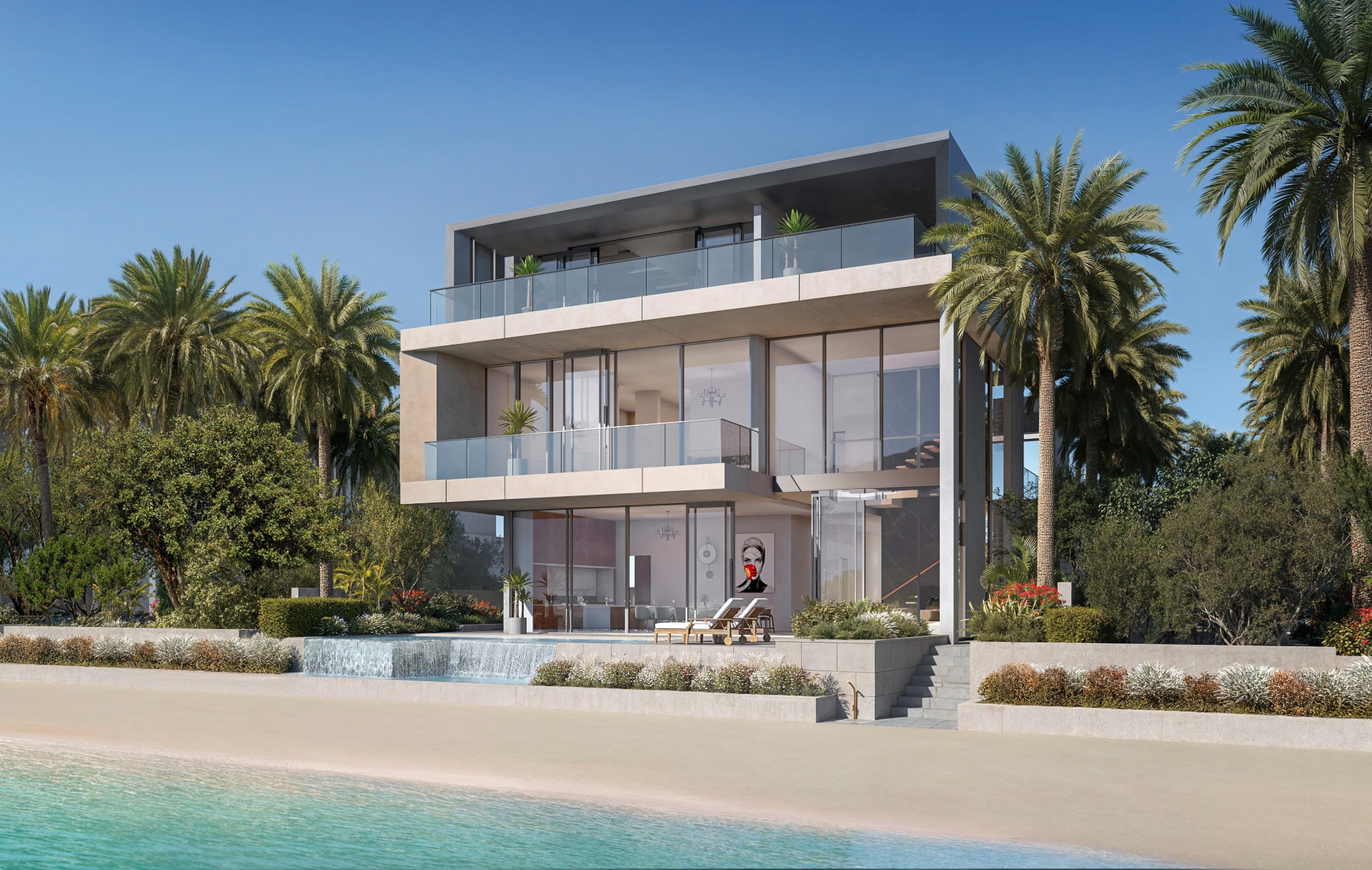
A beachfront villa can extend well beyond a conventional investment cycle. When a property combines scarce coastal land, adaptable architecture, privacy, and a well-planned residential setting, it can remain highly relevant to a family as its priorities change across several generations.
Dubai’s upper end is supported by buyers seeking permanent residences, second homes and long-term stores of wealth. According to Knight Frank, the city recorded 500 residential sales above US$10 million in 2025, including 68 above US$25 million. A further 296 homes exceeding US$10 million sold during the first half of 2026, generating US$5.1 billion and setting a new half-year record. This depth of ultra-prime activity reflects a market increasingly shaped by scarcity, lifestyle permanence and long-horizon capital preservation.
Why Beachfront Villas Appeal to Long-Term Buyers
The principal advantage of genuine beachfront property is physical scarcity. Dubai can expand its residential supply vertically and inland, but private villa plots with direct coastal access remain limited by geography and planning policy. For long-term buyers, this makes true beachfront ownership fundamentally different from broader residential exposure.
This distinction becomes more important as the wider market adds substantial apartment supply. Apartments account for approximately 85% of Dubai’s forecast residential pipeline, compared with 14% for villas. Limited new villa supply can support long-term value when it is combined with established infrastructure, controlled density, and sustained end-user demand. In this context, beachfront villas sit within a narrower and more defensible segment of Dubai’s luxury property market.
What Defines a Resilient Beachfront Asset
For buyers comparing luxury properties in Dubai, a sea view alone is therefore insufficient. The strongest assets combine direct beach access, generous plots, privacy, architectural durability, and a location that can continue serving residents after its initial launch period. Resilience is created when lifestyle quality, land scarcity and long-term usability are embedded into the property from the outset.
Beachfront villas also offer a form of value that is difficult to replicate through smaller investment units. They can function simultaneously as principal homes, seasonal residences, and capital assets, reducing the pressure to sell when financial or family priorities change. This flexibility allows ownership to move beyond yield or short-term appreciation and into broader wealth-planning territory.
How Beachfront Villas Support Multi-Generational Living
Household requirements evolve over time. Children become adults, older relatives may join the home, and residences may need to accommodate longer visits, staff, or changing accessibility requirements. For families with a long-term view, the ability of a home to adapt is as important as its initial aesthetic appeal.
A carefully designed beachfront residence can respond through multiple bedroom suites, flexible reception spaces, separate family and formal areas, private gardens, and adaptable rooms. This reduces functional obsolescence, the risk that a property becomes unsuitable even while its location remains valuable. In legacy-focused ownership, this adaptability helps protect both the practical use and emotional relevance of the home.
Emotional Value Encourages Patient Ownership
Physical space is only one part of the legacy equation. A villa used for family holidays, celebrations, and significant life events can acquire emotional value that deepends the connection between owners and the property. Families may consequently be less inclined to sell during temporary market weakness, supporting a more measured ownership approach than those associated with purely income-led assets.
This behaviour is visible among wealthy buyers. Knight Frank’s 2025 survey of 387 global high-net-worth individuals found that 83% were interested in purchasing land in Dubai to build a home, demonstrating growing demand for personalised residences intended for occupation rather than rapid resale.
Why Dubai is Attracting Long-Term Property Owners
Dubai’s appeal now extends beyond short-term capital gains, increasingly attracting buyers prioritising lifestyle stability, wealth preservation and long-term residency . International connectivity, expanding education and healthcare provision, long-term residency pathways and a more mature regulatory environment allow global families to view the city as a credible long-term home base rather than solely an investment destination .
The UAE’s Golden Visa framework provides renewable five-year residency for qualifying real estate investors, subject to conditions including property ownership worth at least AED2 million. This gives eligible owners greater certainty when coordinating property decisions with business, education, retirement, and family planning, helping align real estate ownership with broader long-term life objectives.
Market participation supports this shift. Dubai recorded AED252 billion in real estate transactions during the first quarter of 2026, representing 31% year-on-year value growth. The period also attracted 29,312 new investors, 14% more than in the equivalent period of 2025, highlighting sustained confidence in the emirate’s long-term residential market.
Palm Jebel Ali’s Role in Long-Term Wealth and Lifestyle Planning
Palm Jebel Ali is being developed at a scale intended to support a complete waterfront destination rather than an isolated collection of villas. The 13.4-square-kilometre archipelago is planned to add approximately 110 kilometres of coastline, including 91 kilometres of beachfront, and eventually accommodate around 35,000 families, creating one of Dubai’s most expansive residential waterfront environments.
This scale matters because long-term residential value depends on the environment beyond an individual plot. Community services, mobility, landscaping, hospitality, public spaces, and infrastructure collectively shape whether a destination remains desirable and liveable after its initial novelty has passed.
Villa Design and Delivery Strengthen Legacy Potential
Palm Jebel Ali’s villa collections are designed around space, natural light, privacy, waterfront views and a direct relationship with the coastal setting. Construction has also moved into a more advanced delivery stage: contracts worth more than AED3.5 billion were awarded in April 2026 for 544 villas, while the first villa handovers are scheduled to commence during 2026, providing greater visibility into the development’s progression from master plan to reality.
Execution is particularly important for legacy-focused buyers. Progress in infrastructure and villa delivery helps transform the vision of the community into an established residential destination, reducing the distance between the master plan and a functioning residential community. It also allows families to evaluate Palm Jebel Ali not only as an expression of luxury living in Dubai, but as a long-term setting for residence, recreation, and intergenerational ownership.
Turning a Beachfront Property into a Family Legacy
A beachfront villa becomes a legacy asset when scarcity, long-term adaptability and emotional significance reinforce one another. Dubai’s record ultra-prime activity, growing end-user demand and long-term residency framework provide a strong foundation, but lasting value still depends on selecting a property capable of retaining relevance across changing family needs and market cycles.
Palm Jebel Ali brings together substantial coastal scarcity, private villa living and infrastructure-led master planning. Families considering ownership can explore Palm Jebel Ali’s villa collections to identify a home capable of supporting present-day ambitions while retaining relevance for generations to come.