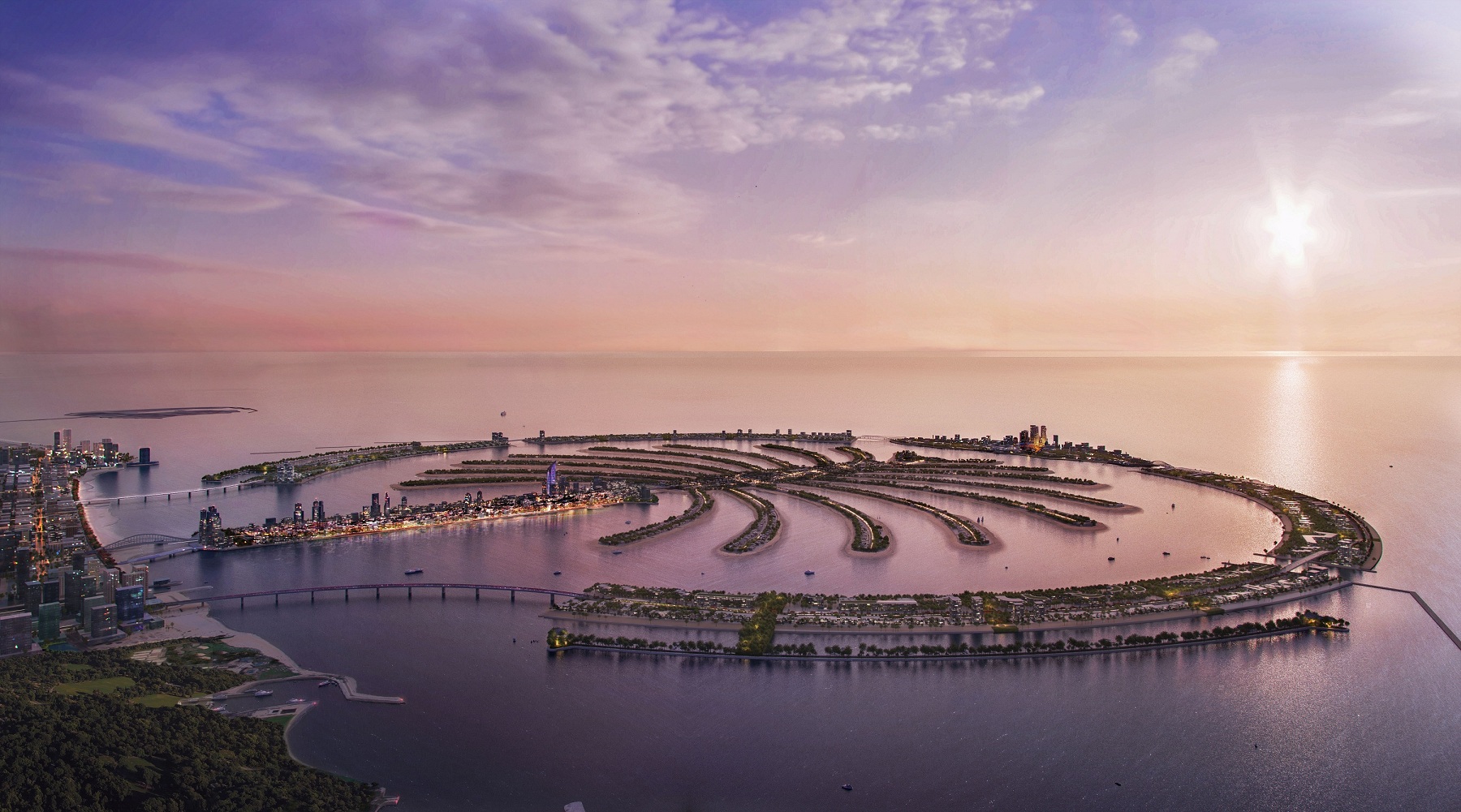
Waterfront real estate has become the clearest expression of scarcity in Dubai’s premium housing market: a finite edge condition, protected view corridors, and lifestyle infrastructure that cannot be replicated at scale once the coastline is committed. This physical limitation underpins long-term value creation in the city’s most desirable residential enclaves.
That scarcity is being met by deep, broad-based demand. Dubai Land Department’s Annual Report shows 158,038 unique investors in 2024 with AED 525 billion in combined investment, including108,000+ new investors, a market-depth signal that matters for luxury realestate in Dubai because liquidity and buyer diversity underpin pricing power.
The Rise of Luxury Real Estate in Waterfront Areas of Dubai
Growing Demand for Luxury Homes in Dubai Along the Coast
Dubai’s premium upswing has been driven by sentiment and supported by measurable market momentum. In 2024, Dubai reached AED 760.99 billion in total real estate transaction value (an all-time high),reinforcing that demand has expanded in both depth and scale. This growth reflects heightened confidence across domestic and international buyer segments.
On pricing, Knight Frank reported average residential prices increased by 19.1% in 2024, with villas up20.2%, highlighting the continuing preference for larger formats and privacy attributes that align naturally with waterfront addresses and the luxury homes segment.
Why Ultra-Luxury Homes Lead Dubai’s Premium Market Long Term
In the upper tiers, the market behaves differently: supply is thinner, the buyer pool is more international, and decision-making often centres on legacy value and capital preservation rather than short-term yield.
Dubai Land Department data points to tightening at the very top end, citing a 48% reduction in the number of homes priced above AED 50 million (2024 versus 2023). This contraction functions as a clear scarcity signal within the ultraluxury segment, helping explain why trophy waterfront stock tends to maintain pricing power even as broader supply expands.
Waterfront Living as a Driver of Property Value
How Beachfront Residences Increase Capital Appreciation
The value mechanism behind waterfront living is structural: limited land, protected sightlines, and a lifestyle proposition that compresses demand into a narrow band of supply. In Dubai’s 2024 cycle, the performance of primevilla districts illustrates this effect. ValuStrat reported villa prices rose 31.9%year-on-year (as of December 2024), with Palm Jumeirah villas up 42.5%, a clear example of how a proven coastal address can outperform the broader market.
At the market level, ValuStrat’s Price Index recorded 27.5% annual growth in residential capital values in 2024, showing that the upswing was not isolated, while the most constrained locations still led the curve.
Market Stability in Dubai's Luxury Property Market
Why High-End Waterfront Assets Outperform During Market Shifts
Dubai is not immune to cycle shifts. What differentiates outcomes is asset quality and location defensibility. Scar cityled assets tend to absorb volatility more effectively than replicable stock.
Fitch, cited by Reuters, flagged the risk of a double-digit price decline (up to around 15%) between late 2025 and 2026,linked largely to supply delivery. In the same analysis, Fitch noted that the desirability of prime locations and construction delays could moderate the decline, an explicit acknowledgement that prime stock typically proves more resilient during adjustment phases.
Villas Are Outperforming
Within the recent upswing itself, the split between formats has been visible: Knight Frank’s 2024data showed villas outperforming apartments on price growth (20.2% vs 18.9%),reinforcing that space, privacy, and low substitutability (common in waterfront villa markets) have been rewarded.
Thin Supply Supports Firmer Pricing
Add the scarcitysignal at the top end, 48% fewer homes available above AED 50 million (2024 vs2023), and the case strengthens: when supply is thin, and buyer motivation is often long-horizon, pricing discipline tends to hold.
Investor Confidence in Dubai’s Luxury Real Estate Sector
Confidence is best measured through participation and reinvestment. Dubai Land Department reported 49,587repeat investors in 2024, committing nearly AED260 billion, a strong indicator of capital recycling and portfolio expansion.
On the income side, the rental market also signalled persistence. New rental contracts rose 19.7% in 2024 (to 466,180), while average residential villa rents increased 19.6% (AED per sq ft),reflecting sustained demand for premium family living and reinforcing the investment case for high-quality villa stock. As a result, luxury realestate in Dubai is increasingly evaluated through the dual lenses of asset and defensibility and market liquidity.
Future Growth of Luxury Real Estate in Coastal Communities
Infrastructure, Urban Planning, and Waterfront Residential Expansion
Dubai’s coastal thesis is being reinforced by long-horizon planning. The UAE Government’s official overview of the Dubai 2040 Urban Master Plan states that the length of public beaches will increase by 400%, a policy-level signal that waterfront accessibility, public realm investment, and tourism-lifestyle infrastructure remain central to the city’s growth model.
Why Luxury Villas in Prime Waterfront Locations Remain in Demand
The demand case for prime coastal villas is likely to remain durable for three reasons:
1. Finite Inventory
True waterfront villa plots are structurally limited, and scarcity intensifies as the city grows.
2. End-User Depth
High-net-worth relocations and lifestyle-led buyers typically prioritise privacy, wellness, and waterfront access, attributes that do not dilute easily.
3. Cycle Behaviour
During broader supply, capital with global optionality concentrates on best-in-class assets, supporting luxury property in Dubai in its most defensible micro-markets.
The Waterfront Advantage: Built for Resilience
Dubai’s premium market is defined by assets with real constraints: limited coastline, controlled supply, and lifestyle infrastructure that converts location into long-term pricing power. As the city’s urban roadmap expands public beaches and reinforces coastal living, the most investment-resilient opportunities are likely to remain those where scarcity is physical, not manufactured.
Explore Palm Central, Frond A, and Frond B by Palm Jebel Ali as next-generation expressions of that thesis, Dubai’s most ambitious waterfront development on a manmade archipelago, shaped around ultra-luxury villas, beachfront living, and resort-style amenities designed for long-horizon end-users and international investors.